Electronics · 7 min read · 25/09/2026
Sony WH‑1000XM6 or Bose QuietComfort Ultra: Which ANC headphones are right for you?
Noise cancellation, sound, comfort, battery life and codecs in direct comparison, plus the more affordable alternatives Sony WH-1000XM5 and Bose QuietComfort (2nd Gen.).
Ad: links to partner shops are affiliate links. If you buy through them we receive a commission; your price stays the same. Prices are snapshots; the price in the shop is binding.
If you're looking for over-ear headphones with strong noise cancellation, you'll almost always end up with Sony or Bose. The current flagship models are the Sony WH-1000XM6 and the Bose QuietComfort Ultra headphones second generation. Both are very good, but they set different priorities. This comparison is based on manufacturer specifications, construction, and results from independent test media.
The four models at a glance
- Sony WH-1000XM6 (since 2025): Sony's premium-class model with twelve microphones for noise cancelling and LDAC.
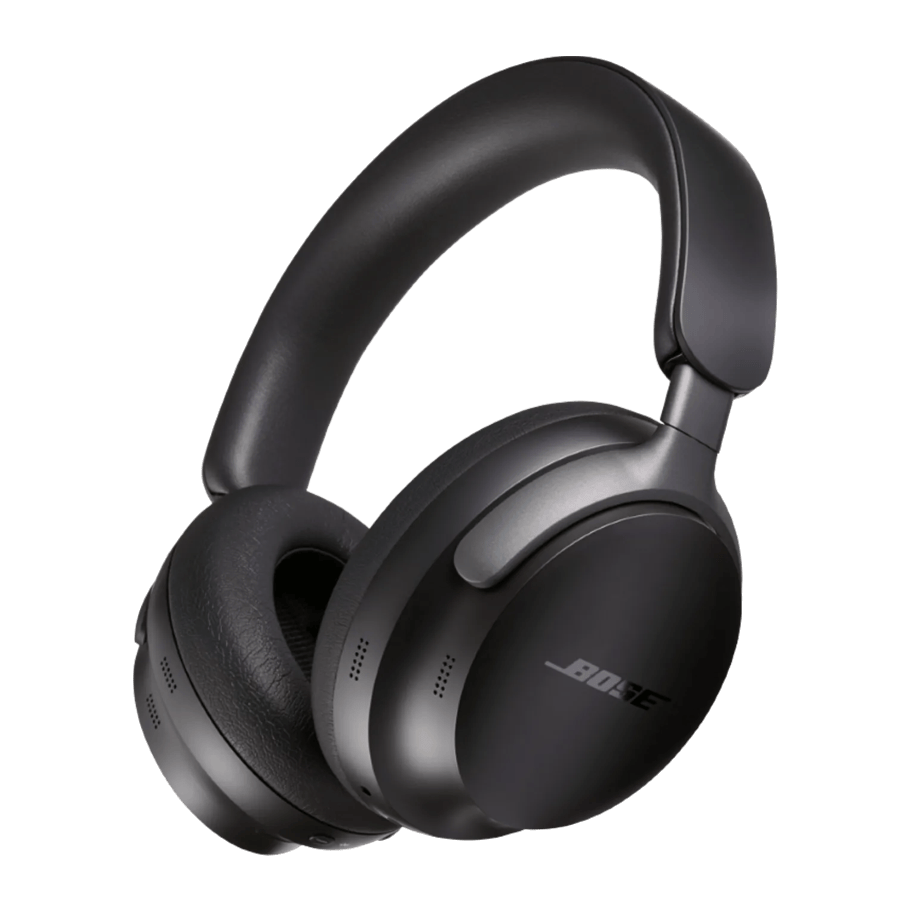
- Bose QuietComfort Ultra headphones (2nd Gen.): Bose's top model with spatial 360-degree sound, Cinema Mode and audio over USB-C.
- Sony WH-1000XM5 (2022): the predecessor, still available in stores and now significantly cheaper.
- Bose QuietComfort headphones (2nd Gen.): since August 2026 the new standard model, one tier below the Ultra.
The first QuietComfort generation, also sold as QuietComfort SC with fabric case, is still occasionally found as clearance stock. It lacks USB-C audio and 360-degree sound.
Noise cancellation
The XM6 uses the QN3 processor and twelve microphones, four more than the XM5. An automatic optimizer adjusts the cancellation to ambient noise and air pressure, such as on an airplane. Bose also regulates the QC Ultra's ANC adaptively. The ActiveSense technology dampens loud sounds in Aware mode while you can still hear your surroundings.
Both flagship models perform at the highest level, and test media don't agree: Sometimes Sony filters measurably more, sometimes Bose is seen ahead, especially at higher frequencies. There is no clear winner. The QuietComfort (2nd Gen.) uses six microphones and comes close to the Ultra in measurements. The XM5 continues to dampen strongly, but is one generation older.
Sound and customization
Sound-wise, both flagship models are at a high level. How much bass you like is a matter of taste. The differences lie in the tools:
- Sony: 10-band equalizer in the Sony | Sound Connect app (5 bands on the XM5), DSEE Extreme for processing compressed music, and an upmix for movies.
- Bose: CustomTune adjusts the sound to your ear when you put it on, plus 360-degree sound and a Cinema Mode for dialogue. The equalizer in the Bose app has only three bands (bass, midtones, treble).
If you like to fine-tune yourself, you're better off with Sony. If you just want to put them on and listen, you won't miss anything with Bose.
Wearing comfort and weight
The weights are close together: the XM6 weighs about 254 grams, the QC Ultra according to Bose about 260 grams, the XM5 about 250 grams. The lightest is the new QuietComfort (2nd Gen.) at 230 grams. Sony has widened the headband on the XM6 and covered it with soft synthetic leather. In tests, Bose is often described as slightly more comfortable for many head shapes. However, comfort remains individual: if possible, try both on for a while, with glasses if you wear them.
Microphones and calls
The XM6 uses six microphones for calls with AI-assisted directivity (beamforming) to separate your voice from ambient noise. Bose also relies on algorithms to filter out your voice. In hearing comparisons by test media, Bose sometimes performs better. With the QuietComfort (2nd Gen.), Bose has improved voice recording compared to the first generation according to its own information. For long conferences in a loud open-plan office, a headset with boom microphone remains superior.
Battery life
- XM6: up to 30 hours with ANC, 40 without. With LDAC it's up to 26 hours. Three minutes on a USB-PD charger gives about three hours.
- QC Ultra (2nd Gen.): up to 30 hours, with 360-degree sound 23 hours. 15 minutes of charging brings about three hours.
- XM5: up to 30 hours with ANC, 40 without.
- QuietComfort (2nd Gen.): up to 24 hours, with 360-degree sound 18 hours.
In endurance tests by test media, the XM6 lasted noticeably longer than the QC Ultra.
Codecs and multipoint
- XM6: SBC, AAC, LDAC and LC3 for LE Audio, Bluetooth 5.3, Auracast-capable.
- XM5: SBC, AAC and LDAC, Bluetooth 5.2.
- QC Ultra (2nd Gen.): SBC, AAC and aptX Adaptive for smartphones with Snapdragon Sound, Bluetooth 5.4, plus lossless audio via USB-C cable.
- QuietComfort (2nd Gen.): only SBC and AAC, Bluetooth 5.4, but also USB-C audio up to 24 bit and 48 kHz.
On iPhone, all four use AAC. LDAC only benefits with matching Android devices, aptX Adaptive only with Snapdragon Sound smartphones. Wired, Sony only offers the 3.5 mm jack, no audio over USB-C.
All four support multipoint: they stay connected to two devices at the same time, such as laptop and smartphone, without you having to re-pair each time.
Portability and transport
With the XM6, Sony returns to the folding mechanism: the ear cups rotate flat and fold into the headband, the case closes magnetically. The XM5 can only be rotated flat, not folded, and therefore takes up more space in a backpack. Both Bose models can be folded together and come with a case. The flagship models have no water resistance rating and are not intended for strenuous exercise.
What to look for in offers
- The XM5 is the classic value for money option: ANC and battery life are still strong, it mainly lacks the folding mechanism, LE Audio and the newer microphones.
- With Bose, pay careful attention to the generation: "QuietComfort Ultra" and "QuietComfort" each come in first and second generation.
- Color variants are discounted differently, it's worth checking all colors.
Find current headphone deals in our Deals.